What to bring to the brief
Use permission-based footage, a professional explanation and the correct service description. Keep panel labels, customer paperwork and identifying address details out of the edit where they are not needed.
Electrician marketing in Dallas connects your crew’s real expertise with video content, useful service pages and advertising built around the electrical jobs you want.
Separate installation inquiries from small repairs, emergencies and commercial work. Ask about the requested service and location first, then route technical assessment to your qualified team.

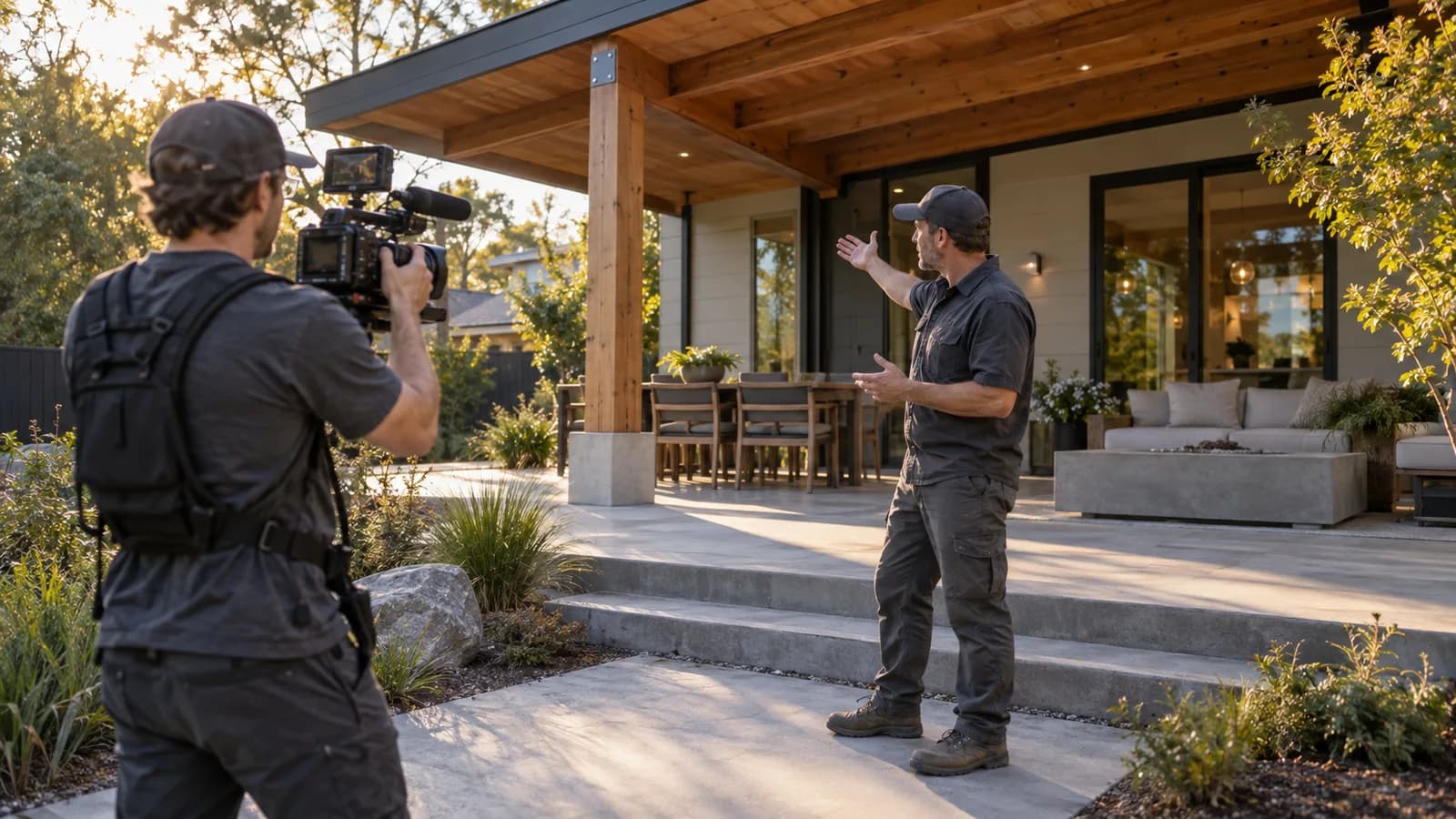
Your people.
Your process.
Your point of view.
Record the questions homeowners ask before agreeing to an electrical estimate. The electrician explains the decision in plain language while footage shows the professional process. Cut the story into a useful service explanation, short videos and an ad leading to the matching service page.
Bishop Arts, Deep Ellum and the Dallas Arts District give a Dallas brief more precision than a single DFW label. Use the actual business setting to choose the subject, access arrangements and intended customer.
Choose a north Dallas, central Dallas or Fort Worth starting cluster based on the crew’s real working area. Use a real project to answer a specific buying question, then explain where the company serves DFW. North Dallas work can have its own context without asserting that every suburb needs an identical service article. Capture the property city before committing estimate time. A company centered on north Dallas should identify Fort Worth requests early and agree whether to accept, reschedule or decline them.
Plan Plano and Frisco project footage as a north Dallas route. A Fort Worth stop needs its own travel allowance, so a useful interview and a few nearby jobs may produce more usable material than crossing all of DFW.
Explore the Dallas marketing plan →A qualified electrician can walk through how an upgrade is assessed, which questions the customer should prepare and how installation work is planned. Show the actual job without turning marketing footage into do-it-yourself electrical instructions.
A Bishop Arts business story can pair an owner’s explanation with the customer experience at the premises. Choose an interview location where customers can hear the answer, and arrange any operating-business footage around the owner’s schedule.
Identify whether the story is about visiting the business or booking work at a customer’s property. That choice changes the shots, location wording and call to action.
Visit Dallas neighborhood guide →Use permission-based footage, a professional explanation and the correct service description. Keep panel labels, customer paperwork and identifying address details out of the edit where they are not needed.
Ask whether the inquiry concerns an installation, repair or commercial project, then confirm the property area. Keep an assessment request distinct from an approved scope or a booked installation.
Proposed approach, not a completed client project. We build the final brief around your real work and agreed coverage.
Separate installation inquiries from small repairs, emergencies and commercial work. Ask about the requested service and location first, then route technical assessment to your qualified team.
Your qualified professional reviews technical claims. Videos explain your service rather than instructing viewers to perform dangerous electrical work.
For the next step, connect the real project footage to a clear inquiry page and a response process your team can support.
Count relevant estimate requests separately from completed electrical jobs. Review service mix, travel and appointment capacity before expanding a campaign.
Views, leads and confirmed sales tell different parts of the story. Available reporting depends on account access and setup. Complete customer attribution and AI call handling remain in development.
See current reporting availability →Read the anonymous Seattle electrician case for one founder-reported example. It is not a prediction for your business.
Good to know
Separate installation inquiries from small repairs, emergencies and commercial work. Ask about the requested service and location first, then route technical assessment to your qualified team. Capture the property city before committing estimate time. A company centered on north Dallas should identify Fort Worth requests early and agree whether to accept, reschedule or decline them.
Plan Plano and Frisco project footage as a north Dallas route. A Fort Worth stop needs its own travel allowance, so a useful interview and a few nearby jobs may produce more usable material than crossing all of DFW. A useful starting story: a panel-assessment explanation led by your qualified electrician. Your qualified professional reviews technical claims. Videos explain your service rather than instructing viewers to perform dangerous electrical work.
For a proposed project in Bishop Arts: A qualified electrician can walk through how an upgrade is assessed, which questions the customer should prepare and how installation work is planned. Show the actual job without turning marketing footage into do-it-yourself electrical instructions. Identify whether the story is about visiting the business or booking work at a customer’s property. That choice changes the shots, location wording and call to action. This is a planning example, not a completed client project.
Write useful service coverage for the part of DFW the company can reach. Link a relevant Plano or Frisco project into the broader Dallas service explanation without creating fictional local branches. Record the questions homeowners ask before agreeing to an electrical estimate. The electrician explains the decision in plain language while footage shows the professional process. Cut the story into a useful service explanation, short videos and an ad leading to the matching service page.
Answer a few questions about your business, then choose a time to discuss your electrician marketing plan.
Agency fees and advertising spend are agreed separately. We confirm scope, coverage and delivery before work starts.