What to bring to the brief
Bring footage from the same property at each stage and let the roofing professional approve technical descriptions. Film from safe positions; aerial footage is a separate production decision.
Roofing marketing in Charlotte turns real roofing projects into video stories, useful service content and campaigns aimed at the estimates your company can deliver.
Identify repair versus replacement, the property’s location and the type of building. Keep insurance questions and inspection conclusions with the appropriate professionals.

Your people.
Your process.
Your point of view.
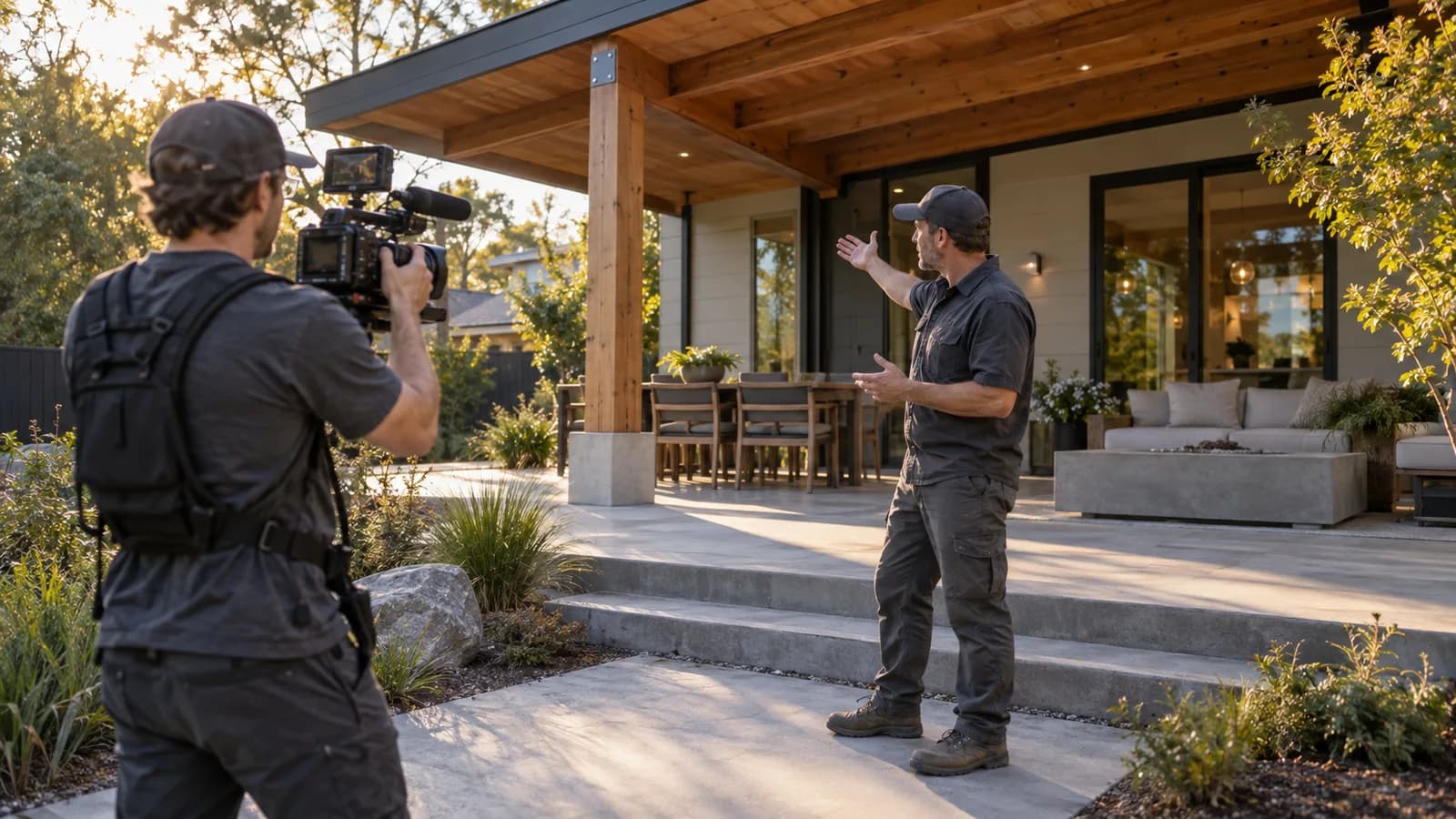
Document the customer’s original question, how your roofer explains the options and the finished result. Safe detail shots and a ground-level interview can communicate care and process without staging a dangerous camera position.
Dilworth, Plaza Midwood and North Charlotte provide useful neighborhood references for an in-city plan. Start with the work your team can demonstrate, then distinguish that territory from Lake Norman or cross-state coverage.
Choose Charlotte, a south metro cluster or the actual cross-state service footprint before planning the campaign. Explain whether the offer serves only North Carolina or also accepted South Carolina areas. Real projects should support the business story without implying a separate staffed office across the state line. Capture city and state where cross-border coverage is relevant. A Fort Mill inquiry needs an explicit service decision if the company normally works only around Charlotte and North Carolina suburbs.
Group Charlotte and nearby project stops according to the working day. If Fort Mill or other South Carolina work is part of the story, confirm coverage and travel rather than assuming every Charlotte shoot includes it.
Explore the Charlotte marketing plan →Use a ground-level interview and approved project details to explain assessment, options and cleanup. Keep a repair inquiry separate from a full replacement story so customers recognize the service they need to discuss.
Dilworth has a documented history as one of Charlotte’s early neighborhoods. For a service business, the useful story is the care taken on a particular project: how the customer’s priorities shaped the assessment, work and finished result.
Ask the professional to explain a choice from the actual job and show the relevant detail. Avoid inferring a property’s condition or service needs from the neighborhood name.
City of Charlotte neighborhood history →Bring footage from the same property at each stage and let the roofing professional approve technical descriptions. Film from safe positions; aerial footage is a separate production decision.
Ask about property type, location and the requested assessment. Leave condition findings, insurance questions and the final scope to the appropriate professionals.
Proposed approach, not a completed client project. We build the final brief around your real work and agreed coverage.
Identify repair versus replacement, the property’s location and the type of building. Keep insurance questions and inspection conclusions with the appropriate professionals.
Do not promise insurance coverage, claim storm damage without assessment or put filming ahead of roof safety. Drone work requires a separately confirmed, appropriate operator and scope.
For the next step, connect the real project footage to a clear inquiry page and a response process your team can support.
Distinguish general inquiries from qualified inspections, estimates and signed jobs. Review crew capacity and project scope before seeking more volume.
Views, leads and confirmed sales tell different parts of the story. Available reporting depends on account access and setup. Complete customer attribution and AI call handling remain in development.
See current reporting availability →Good to know
Identify repair versus replacement, the property’s location and the type of building. Keep insurance questions and inspection conclusions with the appropriate professionals. Capture city and state where cross-border coverage is relevant. A Fort Mill inquiry needs an explicit service decision if the company normally works only around Charlotte and North Carolina suburbs.
Group Charlotte and nearby project stops according to the working day. If Fort Mill or other South Carolina work is part of the story, confirm coverage and travel rather than assuming every Charlotte shoot includes it. A useful starting story: a ground-level explanation of the roofing inspection process. Do not promise insurance coverage, claim storm damage without assessment or put filming ahead of roof safety. Drone work requires a separately confirmed, appropriate operator and scope.
For a proposed project in Dilworth: Use a ground-level interview and approved project details to explain assessment, options and cleanup. Keep a repair inquiry separate from a full replacement story so customers recognize the service they need to discuss. Ask the professional to explain a choice from the actual job and show the relevant detail. Avoid inferring a property’s condition or service needs from the neighborhood name. This is a planning example, not a completed client project.
State Charlotte service coverage accurately, especially when nearby South Carolina areas are included. Useful scope and project information should explain the boundary more clearly than a generic regional claim. Document the customer’s original question, how your roofer explains the options and the finished result. Safe detail shots and a ground-level interview can communicate care and process without staging a dangerous camera position.
Answer a few questions about your business, then choose a time to discuss your roofing marketing plan.
Agency fees and advertising spend are agreed separately. We confirm scope, coverage and delivery before work starts.