What to bring to the brief
Use your own completed work and an accurate description of the service. Make minimum visit requirements and work exclusions clear before someone spends time requesting a quote.
Handyman marketing in Austin helps home-repair businesses show their real workmanship and attract inquiries that fit their services, territory and available schedule.
Ask for location, a short task description and suitable timing. State minimum visit terms only when supplied by the business, and route work outside your scope to the appropriate professional.

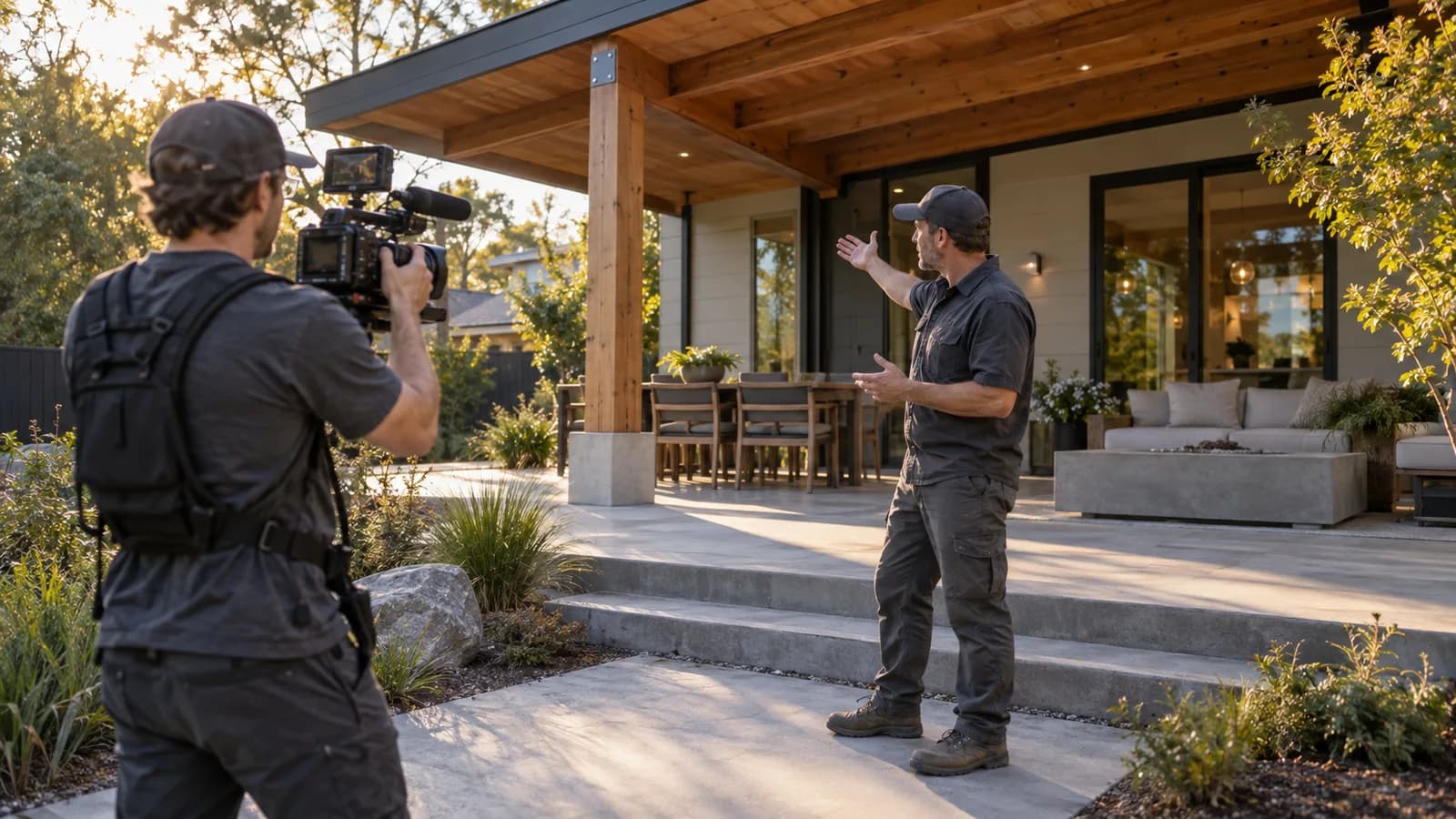
Your people.
Your process.
Your point of view.
A clear job list can be more useful than a broad claim to fix everything. Film examples of the work you accept, explain the assessment process and give the customer a straightforward way to describe their project.
Hyde Park, Mueller and South Congress support different kinds of Austin business stories. Use the real project and customer journey to decide whether the content explains work at a property, introduces a team or invites a visit.
Choose Austin proper, a north metro cluster or a south-side territory around the work your team actually accepts. Use the owner’s expertise to explain the choices behind a project. A Round Rock installation and an Austin remodel can answer different customer questions while still connecting to the same honest company story. Confirm property location and project scope together. A request from a distant part of the metro may need a different appointment slot or travel decision than work near the crew’s normal route.
Plan Round Rock and Cedar Park jobs together when the north metro is the priority. A south Austin stop belongs in the schedule only when it adds a distinct story and leaves enough time for the interview and detail shots.
Explore the Austin marketing plan →Show a few related tasks your business actually accepts and explain how customers prepare a job list. A focused walkthrough helps people distinguish a suitable maintenance visit from a project that needs a different specialist.
Mueller is a distinct Austin neighborhood on the former municipal airport site. A useful business story can show a service process or introduce the people doing the work while keeping the customer’s actual question at the center.
Plan a short explanation that stands on its own, then use project details to support it. Check whether the proposed scene is at your premises, a customer’s property or another location requiring permission.
Visit Austin neighborhood guide →Use your own completed work and an accurate description of the service. Make minimum visit requirements and work exclusions clear before someone spends time requesting a quote.
Collect a short task description, property area and preferred timing. Arrange any necessary photographs and access details during follow-up, then confirm which tasks belong in the visit.
Proposed approach, not a completed client project. We build the final brief around your real work and agreed coverage.
Ask for location, a short task description and suitable timing. State minimum visit terms only when supplied by the business, and route work outside your scope to the appropriate professional.
Describe licensing and trade limitations accurately. Do not imply that a handyman can undertake regulated electrical, plumbing or structural work without the appropriate qualifications.
For the next step, connect the real project footage to a clear inquiry page and a response process your team can support.
Compare inquiries with accepted jobs and travel time. A large number of small requests outside the service area may be less useful than a manageable set of suitable appointments.
Views, leads and confirmed sales tell different parts of the story. Available reporting depends on account access and setup. Complete customer attribution and AI call handling remain in development.
See current reporting availability →Good to know
Ask for location, a short task description and suitable timing. State minimum visit terms only when supplied by the business, and route work outside your scope to the appropriate professional. Confirm property location and project scope together. A request from a distant part of the metro may need a different appointment slot or travel decision than work near the crew’s normal route.
Plan Round Rock and Cedar Park jobs together when the north metro is the priority. A south Austin stop belongs in the schedule only when it adds a distinct story and leaves enough time for the interview and detail shots. A useful starting story: a small repair story with the problem and finished work explained. Describe licensing and trade limitations accurately. Do not imply that a handyman can undertake regulated electrical, plumbing or structural work without the appropriate qualifications.
For a proposed project in Mueller: Show a few related tasks your business actually accepts and explain how customers prepare a job list. A focused walkthrough helps people distinguish a suitable maintenance visit from a project that needs a different specialist. Plan a short explanation that stands on its own, then use project details to support it. Check whether the proposed scene is at your premises, a customer’s property or another location requiring permission. This is a planning example, not a completed client project.
Explain Austin coverage with the actual suburban clusters included. Distinct service questions and real project context should guide page content, rather than making a separate near-copy for every city name. A clear job list can be more useful than a broad claim to fix everything. Film examples of the work you accept, explain the assessment process and give the customer a straightforward way to describe their project.
Answer a few questions about your business, then choose a time to discuss your handyman marketing plan.
Agency fees and advertising spend are agreed separately. We confirm scope, coverage and delivery before work starts.